The effects of changing clocks:
Our speaker was introduced by Bart Dailley.
Mr Antle is a behavioral neuroscientist from the University of Calgary specializing in understanding how our brain and body track environmental cycles.
He has earned a PHD at Simon Fraser University and has trained at Columbia University in New York and Leiden University Medical Centre in the Netherlands.
His research is focused on daily “circadian”rhythms that govern our sleep/wake cycles. Michael is married to Ouida and they have two children.
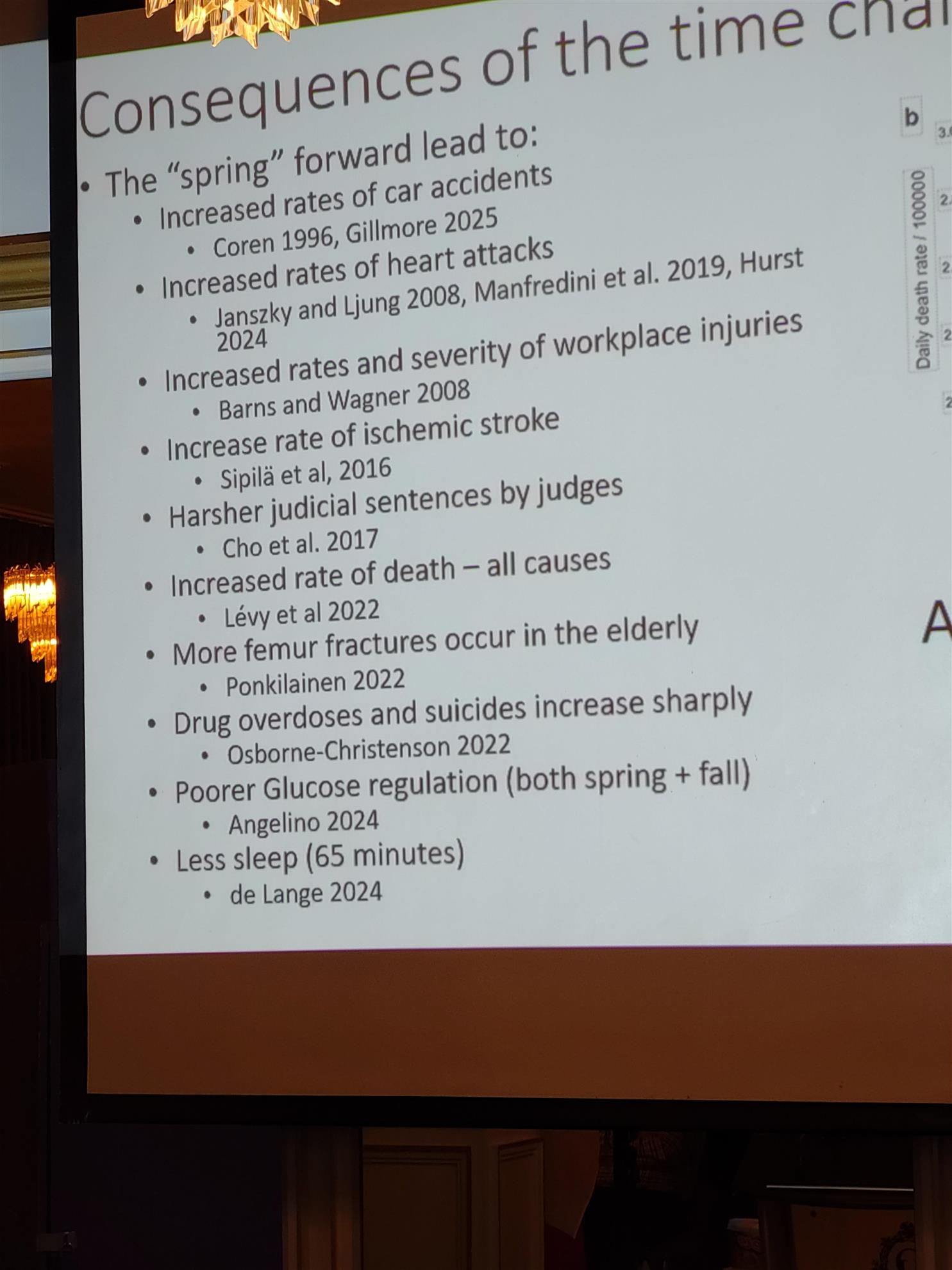
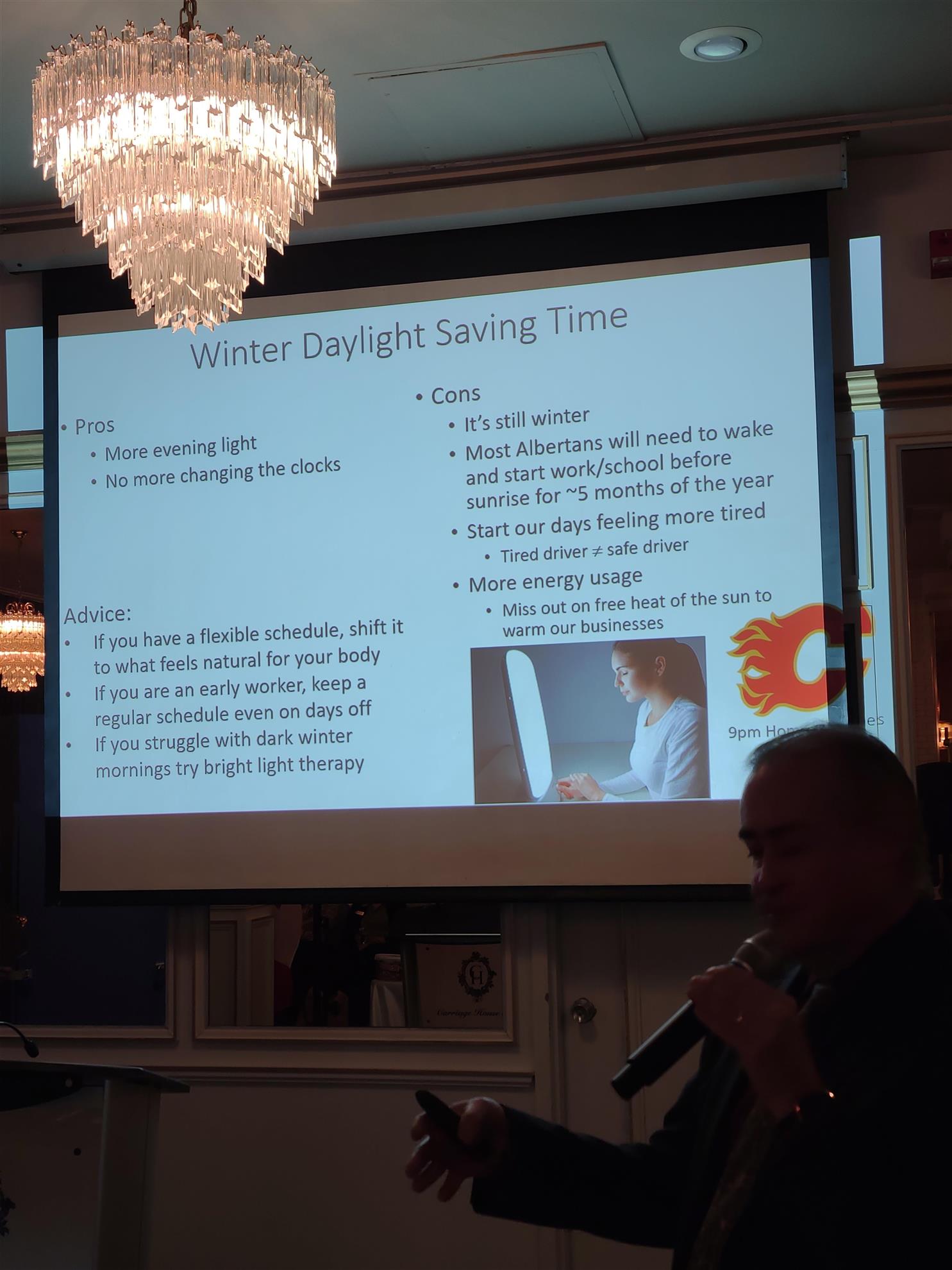
Michael advised that keeping standard time year-round — would be the best bet. Standard time, used historically during the winter months from November to March, is most closely aligned with the sun being at its highest point at noon. He said that because the systems within the human body align themselves with the rising and setting of the sun, standard time is the better fit physiologically.
Of the three options, permanent daylight time (which is the one we have chosen) would be the least preferable, he said, “because of the chronic harm that comes living on the wrong time for the four, five months in the winter. In December, sunrise is at 8:30 here in Calgary,” he said. “If we move to a permanent daylight time like B.C. is doing, it’s going to be 9:30 in the morning. Some parts of Alberta, like Grande Prairie, it will be 10:30.”
Seasonal depression will get worse and productivity in general would go down. Later sunrises have also been associated with a lower health index, with higher risk of obesity, heart attack, diabetes and cancer.