Guest Speaker - Rob Huebert, Director of the Centre for Military and Strategic Studies :
Rob Hubert is a professor in the Department of Political Science at the University of Calgary. He also is the Director of the Centre for Military, Security and Strategic Studies. He was appointed as a member to the Canadian Polar Commission for a term lasting from 2010 to 2015. He is a senior fellow with the Laurier MacDonald Institute, a fellow with the Centre for Military, Security and Strategic Studies,, a research fellow with the Canadian Global Affairs Institute, and a senior fellow with the Conference of Defense Associations Institute. He has taught at Memorial University, Dalhousie University, and the University of Manitoba. He also comments on Canadian security and Arctic issues in both the Canadian and international media.
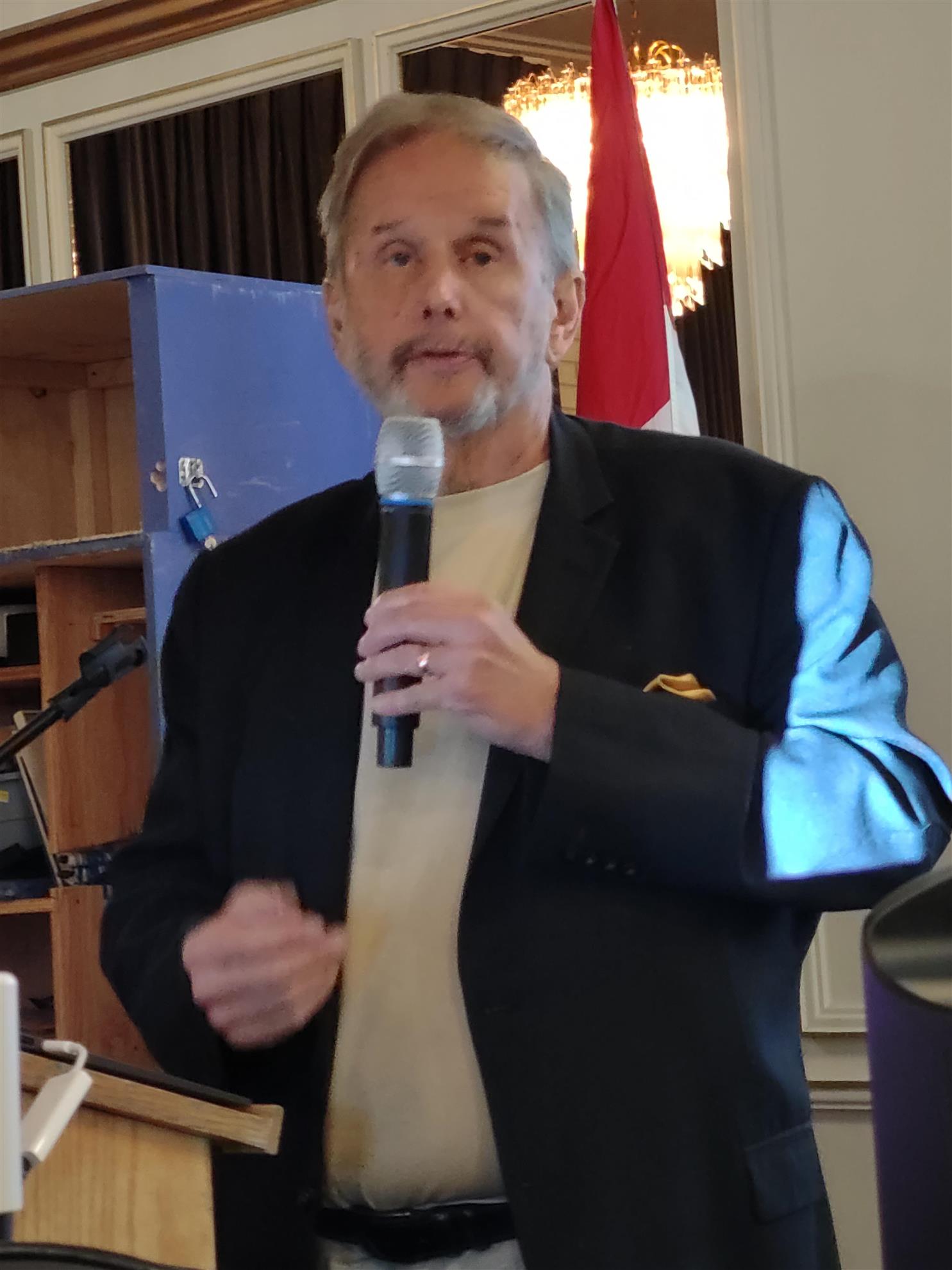
Rob thanked our Club for the invitation to speak to us today and advised that he would be speaking on today’s geopolitical environment. He focused most of his comments on the Arctic and started out by stating that the Arctic’s existential threats to Canada are Climate Change and the recent geopolitical transformation of the world’s nuclear deterrent system.
If we look at the past there was a generally accepted set of rules regarding warfare and the danger of everyone having or using nuclear weapons. The major warfare countries agreed to hold their weapons to certain limits and generally agreed that to use such weapons could end in the destruction of our world.
In recent times however Rob advises that these rules have been severely undermined and we are seeing leaders who will use military power to meet their goals. Specifically we see Russia invading Ukraine and the United States invading Iran.
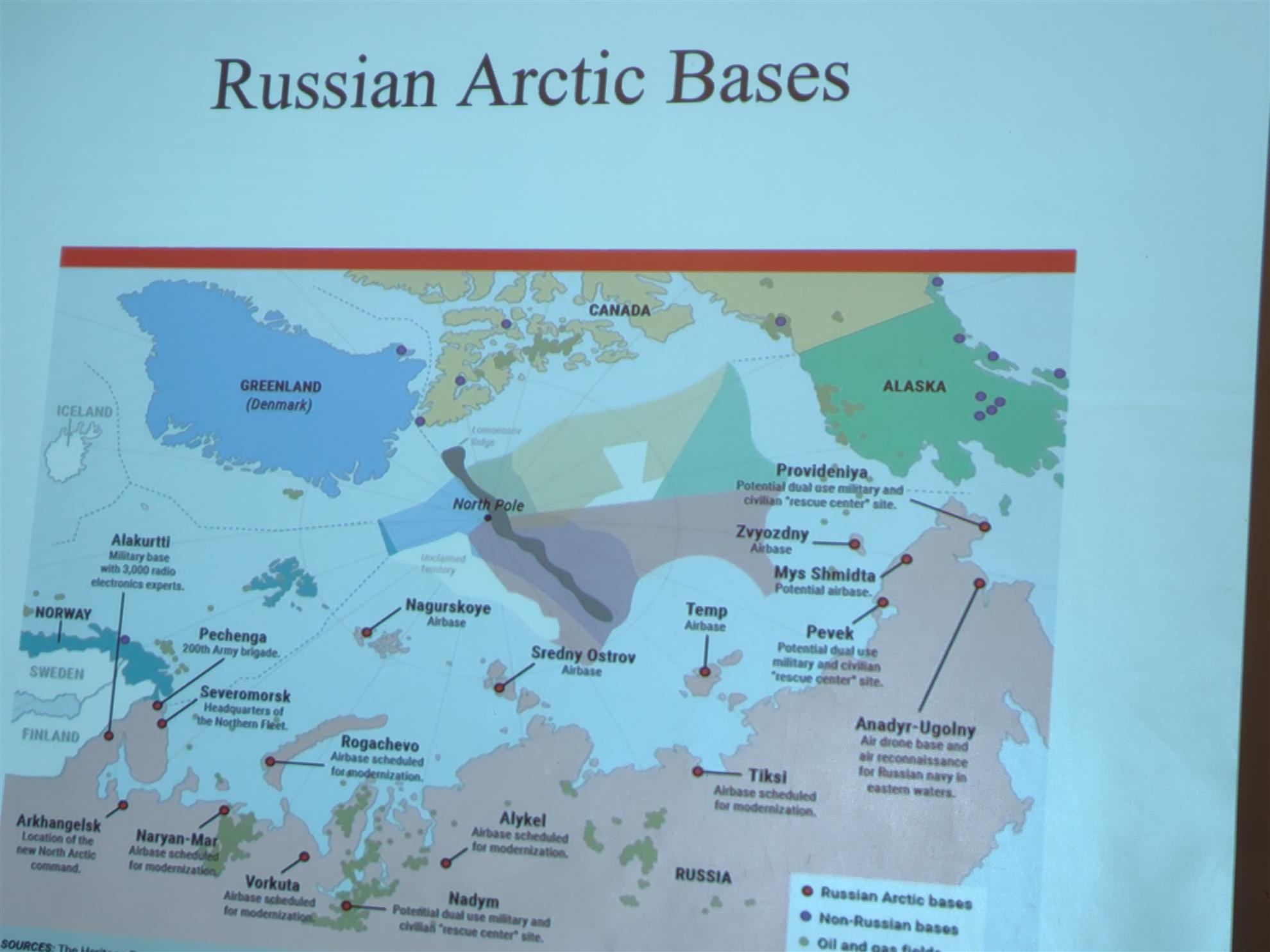
Rob identifies the Arctic as a critical area for Canada to increase its military growth and control. In addition he advises that the effects of Climate change will open up the area for many countries to increase their activity and interest. The Arctic may become effectively ice free (in the summer) in the near future and we’ll see Russia, China and the U.S. being greatly interested in the oil and gas and critical minerals which will become available, Canada and its allies will have to be in a position to protect its interests. For example Russia currently has 22 bases in its own northern arctic regions.
Defense Update 2024
“We must place particular focus on defending the Arctic and North and its approaches against new and accelerating threats through credible deterrence.”
Threats identified are Weapon Delivery Systems from Russia, China, North Korea, Iran.
Canada Arctic Foreign Policy
Dec 6, 2024
Threats to Canada’s security are no longer bound by geography; climate change is accelerating rapidly; and non-Arctic governance of the Arctic. To respond, Canada must be strong in the North American Arctic, and it requires deeper collaboration with its greatest ally, the United States. Canada must also maintain strong ties with its 5 Nordic allies, which are now also all NATO members
Rob also noted other types of “warfare” are actively being used today by our potential enemies (Russia, China, North Korea, Iran, India, Pakistan) such as Cyber Attacks, extensive disinformation campaigns which magnify such subjects as Middle East politics and our own internal political issues.
Conclusion
Nexus between US and Russia Nuclear Weapons Policy and Modernization and rise of China are the newest and most important challenges of the Future Geopolitical Environment.
Rob wrapped up his presentation by stating that Canada finds itself in a very dangerous time and it will take at least 20 years for us to rebuild our defenses.